Product Description
Product Parameters
1. Model Number
Types: H1,H2,H3,H4 Parallel Shaft Gearbox
Sizes: 1,2,3,4,5,24,25,26
2. Product Characteristics
(1)Large torque range, capable of horizontal mounting and vertical mounting.
(2)High-efficiency and long life-span, high permissible axial and radial loads.
(3)Low noise, high reliability and compact structure and so on.
(4)Output shafts type: CHINAMFG shaft, hollow shaft and hollow shaft with shrink disk.
(5)Low noise, high reliability and compact structure.
DimensionsCustomization according to the application.
Rated Power:4KW~3015KW
Rated Torque:0.79N.m~9N.m
| Ratio |
I=1/1.25~1/450 |
| Gear Arrangement |
Helical Hardened Gearbox |
| Rated Torque |
0.79n.M~900kn.M |
| Rated Power |
4kw~3015kw |
| Input Speed |
1500r/Min,1000r/Min,750r/Min |
Description:
HB/HH series spur gear reducer adopt general design layout, and can transform into special gearbox according to customer’s requirements.
It is suitable for high-power motors, with large torque capacity, modular design and multiple output modes. The utility model has the advantages of high efficiency, long service life, bearing large axial force and radial load, low operation noise, high reliability, compact structure, etc. Four series of reducers can be combined to increase the range of ratio.
Characteristics:
1. Transmission speed gearbox housing of 1 size can realize parallel shaft, rectangular axis, horizontal and vertical mode, which reduce the parts variety and increase the specifications.
2. Industrial gear boxes’s sound-absorbable structure, lager housing surface and big fan reduce the temperature-increasing and noise, and with the advanced grinding technology adopting on cylindrical gear and bevel gear, the transmission reliability and efficiency have been increased.
3. Input mode: Motor connected flange mode, shaft mode.
4. Output mode: CHINAMFG shaft with flat key, hollow shaft with flat key, hollow shaft with shrink disk, hollow or CHINAMFG shaft with spline and CHINAMFG shaft with flange.
5. Speed reduction gearbox has Mounting mode: Foot-mounted, flange-mounted, swing base-mounted, torque-arm-mounted.
Our Advantages
Main Series Product: R series helical gear motor reducer, K series spiral bevel gear reducer, F series helical gear motor reducer ,S series helical gear motor reducer,P/Vseries planetary gear reducer, H B series helical gearbox, Z (ZDY, ZLY, ZSY, and ZFY) serial hard tooth surface cylindrical gearbox reducer, D (DBY and DCY) serial hard tooth surface cone gear reducer, cycloidal speed reducer, etc. Meanwhile, map sample processing business can be undertaken.
/* October 22, 2571 15:47:17 */(()=>{function d(e,r){var a,o={};try{e&&e.split(“,”).forEach(function(e,t){e&&(a=e.match(/(.*?):(.*)$/))&&1
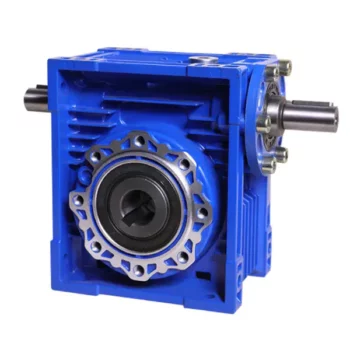
What are the Noise Levels Associated with Worm Gearboxes?
The noise levels associated with worm gearboxes can vary depending on several factors, including the design, quality, operating conditions, and maintenance of the gearbox. Here are some key points to consider:
- Design and Quality: Well-designed and high-quality worm gearboxes tend to produce lower noise levels. Factors such as gear tooth profile, precision manufacturing, and proper alignment can contribute to reduced noise.
- Gear Engagement: The way the worm and worm wheel engage and mesh with each other can impact noise levels. Proper tooth contact and alignment can help minimize noise during operation.
- Lubrication: Inadequate or improper lubrication can lead to increased friction and wear, resulting in higher noise levels. Using the recommended lubricant and maintaining proper lubrication levels are important for noise reduction.
- Operating Conditions: Operating the gearbox within its specified load and speed limits can help prevent excessive noise generation. Overloading or operating at high speeds beyond the gearbox’s capabilities can lead to increased noise.
- Backlash: Excessive backlash or play between the gear teeth can lead to impact noise as the teeth engage. Proper backlash adjustment can help mitigate this issue.
- Maintenance: Regular maintenance, including gear inspection, lubrication checks, and addressing any wear or damage, can help keep noise levels in check.
It’s important to note that while worm gearboxes can produce some noise due to the nature of gear meshing, proper design, maintenance, and operation can significantly reduce noise levels. If noise is a concern for your application, consulting with gearbox manufacturers and experts can provide insights into selecting the right gearbox type and implementing measures to minimize noise.
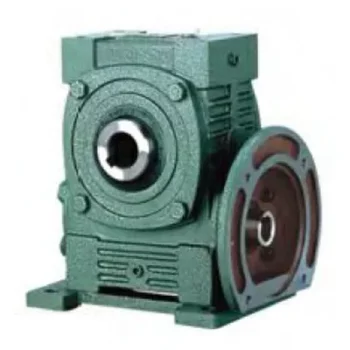
Worm Gearbox vs. Helical Gearbox: A Comparison
Worm gearboxes and helical gearboxes are two popular types of gear systems, each with its own set of advantages and disadvantages. Let’s compare them:
| Aspect | Worm Gearbox | Helical Gearbox |
| Efficiency | Lower efficiency due to sliding friction between the worm and worm wheel. | Higher efficiency due to rolling contact between helical gear teeth. |
| Torque Transmission | Excellent torque transmission and high reduction ratios achievable in a single stage. | Good torque transmission, but may require multiple stages for high reduction ratios. |
| Noise and Vibration | Generally higher noise and vibration levels due to sliding action. | Lower noise and vibration levels due to smoother rolling contact. |
| Backlash | Higher inherent backlash due to the design. | Lower backlash due to meshing of helical teeth. |
| Efficiency at Higher Speeds | Less suitable for high-speed applications due to efficiency loss. | More suitable for high-speed applications due to higher efficiency. |
| Overload Protection | Natural self-locking feature provides some overload protection. | May not have the same level of inherent overload protection. |
| Applications | Commonly used for applications requiring high reduction ratios, such as conveyor systems and heavy-duty machinery. | Widely used in various applications including automotive transmissions, industrial machinery, and more. |
Both worm and helical gearboxes have their place in engineering, and the choice between them depends on the specific requirements of the application. Worm gearboxes are preferred for applications with high reduction ratios, while helical gearboxes are chosen for their higher efficiency and smoother operation.
How to Select the Right Worm Gearbox for Your Application
Selecting the right worm gearbox for your application involves careful consideration of various factors:
- Load Requirements: Determine the torque and load requirements of your application to ensure the selected gearbox can handle the load without compromising performance.
- Speed Reduction: Calculate the required gear reduction ratio to achieve the desired output speed. Worm gearboxes are known for high reduction ratios.
- Efficiency: Consider the gearbox’s efficiency, as worm gearboxes typically have lower efficiency due to the sliding action. Evaluate whether the efficiency meets your application’s needs.
- Space Constraints: Assess the available space for the gearbox. Worm gearboxes have a compact design, making them suitable for applications with limited space.
- Mounting Options: Determine the mounting orientation and configuration that best suits your application.
- Operating Environment: Consider factors such as temperature, humidity, and exposure to contaminants. Choose a gearbox with appropriate seals and materials to withstand the environment.
- Backlash: Evaluate the acceptable level of backlash in your application. Worm gearboxes may exhibit more backlash compared to other gear types.
- Self-Locking: If self-locking capability is required, confirm that the selected gearbox can prevent reverse motion without the need for external braking mechanisms.
- Maintenance: Consider the maintenance requirements of the gearbox. Some worm gearboxes require periodic lubrication and maintenance to ensure proper functioning.
- Cost: Balance the features and performance of the gearbox with the overall cost to ensure it aligns with your budget.
Consult with gearbox manufacturers or experts to get recommendations tailored to your specific application. Testing and simulations can also help validate the suitability of a particular gearbox for your needs.


editor by lmc 2024-11-27