Worm Gearbox for Dairy & Beverage Agitator — Hygienic Precision Drive for Liquid Processing
Dairy processors, breweries, winery operations, and juice manufacturers across Australia depend on agitator drives that combine genuine food-grade construction with smooth, quiet operation that protects product quality. A worm gear reducer for dairy and beverage agitators must achieve slow, precise agitation speeds (often 5–60 rpm), maintain total hygiene integrity under CIP (Clean-in-Place) chemical cycles, and operate with near-zero vibration that would otherwise affect tank mixing homogeneity. Learn about our company and our commitment to food industry quality.
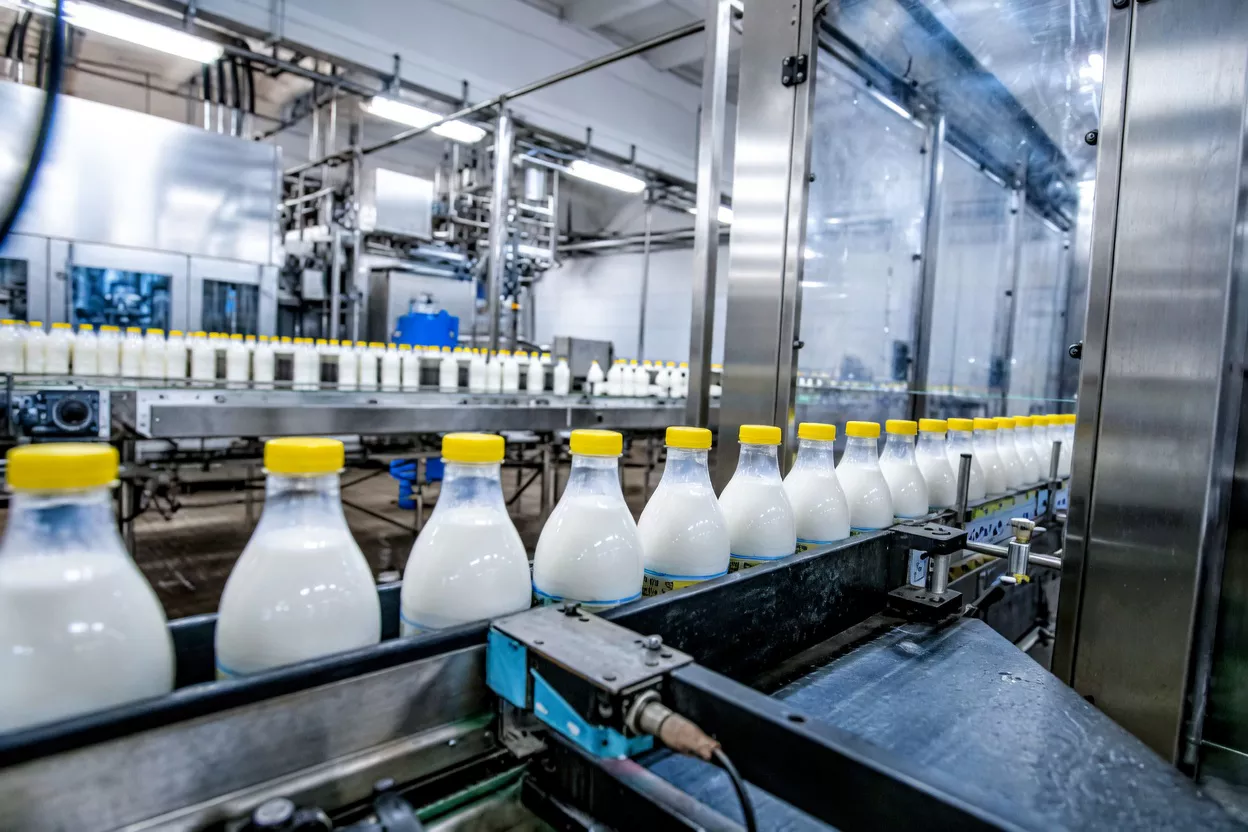
Dairy & Beverage Agitation Drive Requirements
Dairy and beverage applications impose unique drive requirements not found in industrial agitation: the gearbox external surface must be completely smooth with no dirt-trapping pockets or external ribs (meeting EHEDG Type EL class I standards); all product-contact surfaces must be 316L stainless steel; CIP cycles use NaOH (2% at 80°C), nitric acid (1% at 70°C), and peracetic acid (0.2% at ambient) that must not degrade seals or coatings over a 10+ year product life; and gear oil must be H1 food-grade synthetic with a zero-odour formulation that doesn’t affect flavour or aroma of the product batch.
Material & Hygiene Design
- Housing: 316L stainless steel — electropolished to Ra ≤ 0.8 µm; completely smooth geometry with radius transitions, no threaded blind holes exposed.
- Output Shaft: 316L SS with mechanical face seal — positive liquid exclusion from the gear oil chamber; no lubricant migration to process side.
- Gear Oil: NSF H1 food-grade synthetic — zero flavour compounds; compatible with all standard CIP chemicals.
- Seals: Mechanical face seal (CIP-cycle rated) or PTFE-encapsulated FKM lip seals — maintains seal integrity through repeated 80°C alkali/acid wash cycles.
- Design Standard: EHEDG (European Hygienic Engineering) Type EL compliant geometry.
Technical Specifications
| Parametr | Specyfikacja |
|---|---|
| Gear Ratio | 20:1 – 100:1 |
| Agitator Speed | 5 – 80 rpm |
| Moment obrotowy wyjściowy | Up to 5,000 Nm |
| Materiał obudowy | 316L stainless steel (standard) |
| Surface Finish | Ra ≤ 0.8 µm electropolished exterior |
| Gear Oil | NSF H1 food-grade synthetic |
| Seal Type | Mechanical face seal or PTFE FKM lip seal |
| CIP Compatibility | 80°C NaOH 2%; HNO₃ 1%; PAA 0.2% |
| Protection Rating | IP66/IP67 (with mechanical face seal) |
| Standardy | EHEDG Type EL; NSF/ANSI 169; 3-A Sanitary |
Quality & Compliance Standards
Dairy and beverage agitator worm gear drives are manufactured under ISO 9001:2015 and carry CE marking. All 316L stainless steel components carry EN 10204 3.1 material test certificates. The external housing geometry meets EHEDG Type EL (enclosed liquid) hygienic design guidelines. Gear lubricants carry NSF H1 registration and comply with FDA 21 CFR 178.3570. Motor interfaces conform to IEC 60072 B5 (D-flange) for direct-mount agitator drive assemblies. Protection rating: IP66 standard; IP67 with mechanical face seal.
Case Studies
Dairy Processor — Murray Bridge, SA
Vat agitator for yoghurt culture tank
Challenge: Standard mechanical seal failed after 6 months of daily CIP cycles, contaminating yoghurt batches with gear oil.
Solution: Replaced with EHEDG-compliant worm gearbox with CIP-rated mechanical face seal and NSF H1 oil.
Outcome: Zero contamination events in 28 months; CIP cycle compatibility confirmed at monthly seal inspection.
Craft Brewery — Ballarat, VIC
Fermenter and conditioning tank agitator
Challenge: Mild steel fasteners on gearbox housing rusted into beer wort during open-tank agitation, causing colour and flavour defects.
Solution: Specified all-316L SS gearbox with Viton seals and 316SS external hardware; zero ferrous components exposed.
Outcome: Beer quality certificates restored; gearbox passed brewery-internal hygiene audit first time after installation.
Juice Processing — Mildura, VIC
Juice blending tank agitator drive
Challenge: Citric acid condensation at 4°C cold-room temperature corroded standard aluminium housing within one season.
Solution: Replaced with 316L SS gearbox and low-temperature synthetic H1 oil; electropolished finish resists citric acid pitting.
Outcome: No corrosion after 2 seasons; juice HACCP audit passed with zero non-conformances related to drive equipment.
Why Food Processors Trust Our Drives
EHEDG-Compatible Design
Smooth geometry, no dead zones — designed for cleanability from first principles, not retrofitted.
H1 Oil as Standard
NSF H1 food-grade oil supplied as standard fill — no special order or upcharge required.
Material Certification
EN 10204 3.1 material certificates for all 316L SS components — available for HACCP documentation.
Cold Room Compatible
−40°C synthetic oil fill for dairy cold rooms, refrigerated fermentation, and frozen dessert plant.
Custom Impeller Interfaces
Output shaft diameter and impeller coupling configurations matched to your tank design.
Frequently Asked Questions
Talk to Our Drive Specialists
Get the right worm gear solution for your application — fast.