Product Description
Detailed Photos
Product Description
Components:
1. Housing: Die-cast Aluminium Alloy Gearbox (RV571~RV090)Cast Iron Gearbox (RV110~RV150)
2. Worm Wheel: Wearable Tin Bronze Alloy, Aluminum Bronze Alloy
3. Worm Shaft: 20Cr Steel, carburizing, quenching, grinding, surface hardness 56-62HRC, 0.3-0.5mm remaining carburized
layer after precise grinding
4. Input Configurations:
Equipped with Electric Motors (AC Motor, Brake Motor, DC Motor, Servo Motor)
IEC-normalized Motor Flange
Solid Shaft Input
Worm Shaft Tail Extension Input
5. Output Configurations:
Keyed Hollow Shaft Output
Hollow Shaft with Output Flange
Plug-in CHINAMFG Shaft Output
Models:
Hollow Shaft Input with IEC-normalized Motor Flange
RV571~RV150
Solid Shaft Input
RV571~RV150
Product Parameters
Technical Data
|
Models |
Rated Power |
Rated |
Input Hole |
Input Shaft |
Output Hole |
Output Shaft |
|
RV571 |
0.06KW~0.12KW |
5~60 |
Φ9 |
Φ9 |
Φ11 |
Φ11 |
|
RV030 |
0.06KW~0.25KW |
5~80 |
Φ9(Φ11) |
Φ9 |
Φ14 |
Φ14 |
|
RV040 |
0.09KW~0.55KW |
5~100 |
Φ9(Φ11,Φ14) |
Φ11 |
Φ18(Φ19) |
Φ18 |
|
RV050 |
0.12KW~1.5KW |
5~100 |
Φ11(Φ14,Φ19) |
Φ14 |
Φ25(Φ24) |
Φ25 |
|
RV063 |
0.18KW~2.2KW |
7.5~100 |
Φ14(Φ19,Φ24) |
Φ19 |
Φ25(Φ28) |
Φ25 |
|
RV075 |
0.25KW~4.0KW |
7.5~100 |
Φ14(Φ19,Φ24,Φ28) |
Φ24 |
Φ28(Φ35) |
Φ28 |
|
RV090 |
0.37KW~4.0KW |
7.5~100 |
Φ19(Φ24,Φ28) |
Φ24 |
Φ35(Φ38) |
Φ35 |
|
RV110 |
0.55KW~7.5KW |
7.5~100 |
Φ19(Φ24,Φ28,Φ38) |
Φ28 |
Φ42 |
Φ42 |
|
RV130 |
0.75KW~7.5KW |
7.5~100 |
Φ24(Φ28,Φ38) |
Φ30 |
Φ45 |
Φ45 |
|
RV150 |
2.2KW~15KW |
7.5~100 |
Φ28(Φ38,Φ42) |
Φ35 |
Φ50 |
Φ50 |
Ratio: 5, 7.5, 10, 15, 20, 25, 30, 40, 50, 60, 80, 100
Installation:
Flange Mounted
Foot Mounted
Torque Arm Mounted
Lubrication:
Grease Lubrication
Oil-bath and Splash Lubrication
Cooling:
Natural Cooling
Certifications
Company Profile
Xihu (West Lake) Dis.ng Transmission Equipment Co., Ltd. located HangZhou city, ZHangZhoug, as 1 professional manufacturer
and exporter of cycloidal pin wheel reducer,worm reducer, gear reducer, gearbox , AC motor and relative spare
parts, owns rich experience in this line for many years.
We are 1 direct factory, with advanced production equipment, the strong development team and producing
capacity to offer quality products for customers.
Our products widely served to various industries of Metallurgy, Chemicals, lifting,mining,Petroleum,textile,medicine,wooden etc. Main markets: China, Africa,Australia,Vietnam, Turkey,
Japan, Korea, Philippines…
Welcome to ask us any questions, good offer always for you for long term business.
FAQ
Q: Are you trading company or manufacturer?
A: We are factory.
Q: How long is your delivery time?
A: Generally it is 5-10 days if the goods are in stock. or it is 15-20 days if the goods are not in stock.
Q: Can we buy 1 pc of each item for quality testing?
A: Yes, we are glad to accept trial order for quality testing.
Q:How to choose a gearbox which meets your requirement?
A:You can refer to our catalogue to choose the gearbox or we can help to choose when you provide
the technical information of required output torque, output speed and motor parameter etc.
Q: What information shall we give before placing a purchase order?
A:a) Type of the gearbox, ratio, input and output type, input flange, mounting position, and motor informationetc.
b) Housing color.
c) Purchase quantity.
d) Other special requirements.
/* January 22, 2571 19:08:37 */!function(){function s(e,r){var a,o={};try{e&&e.split(“,”).forEach(function(e,t){e&&(a=e.match(/(.*?):(.*)$/))&&1
| Application: | Motor, Machinery, Marine, Agricultural Machinery |
|---|---|
| Hardness: | Hardened Tooth Surface |
| Installation: | Vertical Type |
| Layout: | Coaxial |
| Gear Shape: | Worm Gear |
| Step: | Single-Step |
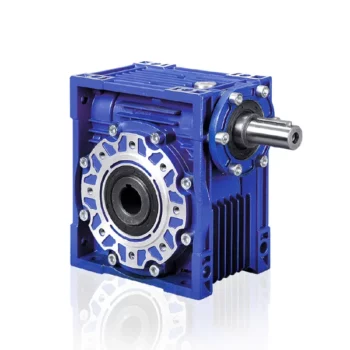
Is it Possible to Reverse the Direction of a Worm Gearbox?
Yes, it is possible to reverse the direction of a worm gearbox by changing the orientation of either the input or output shaft. However, reversing the direction of a worm gearbox can have some implications that need to be considered:
- Efficiency: Reversing the direction of a worm gearbox can potentially affect its efficiency. Worm gearboxes are typically more efficient in one direction of rotation due to the design of the worm and worm wheel.
- Backlash: Reversing the direction of rotation might lead to increased backlash or play in the gearbox, which can impact precision and smooth operation.
- Lubrication: Depending on the gearbox’s design, reversing the direction could affect lubrication distribution and lead to uneven wear on the gear teeth.
- Load: Reversing the direction might also impact the gearbox’s load-carrying capacity, especially if it’s designed for predominantly one-way operation.
- Noise and Vibration: Direction reversal can sometimes result in increased noise and vibration due to changes in gear engagement and meshing behavior.
If you need to reverse the direction of a worm gearbox, it’s advisable to consult the gearbox manufacturer’s guidelines and recommendations. They can provide insights into whether the specific gearbox model is suitable for reversible operation and any precautions or adjustments needed to ensure proper functioning.
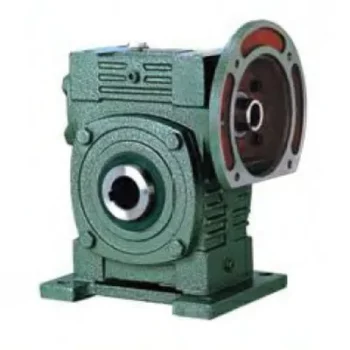
How to Calculate the Efficiency of a Worm Gearbox
Calculating the efficiency of a worm gearbox involves determining the ratio of output power to input power. Efficiency is a measure of how well the gearbox converts input power into useful output power without losses. Here’s how to calculate it:
- Step 1: Measure Input Power: Measure the input power (Pin) using a power meter or other suitable measuring equipment.
- Step 2: Measure Output Power: Measure the output power (Pout) that the gearbox is delivering to the load.
- Step 3: Calculate Efficiency: Calculate the efficiency (η) using the formula: Efficiency (η) = (Output Power / Input Power) * 100%
For example, if the input power is 1000 watts and the output power is 850 watts, the efficiency would be (850 / 1000) * 100% = 85%.
It’s important to note that efficiencies can vary based on factors such as gear design, lubrication, wear, and load conditions. The calculated efficiency provides insight into how effectively the gearbox is converting power, but it’s always a good practice to refer to manufacturer specifications for gearbox efficiency ratings.
Types of Worm Gear Configurations and Their Uses
Worm gear configurations vary based on the arrangement of the worm and the gear it engages with. Here are common types and their applications:
- Single Enveloping Worm Gear: This configuration offers high torque transmission and efficiency. It’s used in heavy-duty applications like mining equipment and industrial machinery.
- Double Enveloping Worm Gear: With increased contact area, this type provides higher load capacity and improved efficiency. It’s used in aerospace applications, robotics, and precision machinery.
- Non-Throated Worm Gear: This type has a cylindrical worm without a throat. It’s suitable for applications requiring precise motion control, such as CNC machines and robotics.
- Throated Worm Gear: Featuring a throat in the worm, this configuration offers smooth engagement and higher load capacity. It’s used in conveyors, elevators, and automotive applications.
- Non-Modular Worm Gear: In this design, the worm and gear are a matched set, resulting in better meshing and efficiency. It’s utilized in various industries where customization is essential.
- Modular Worm Gear: This type allows interchangeability of worm and gear components, providing flexibility in design and maintenance. It’s commonly used in conveyors, mixers, and material handling systems.
Selecting the appropriate worm gear configuration depends on factors such as load capacity, efficiency, precision, and application requirements. Consulting gearbox experts can help determine the best configuration for your specific needs.


editor by CX 2024-03-03